Wanton Bridge: Meaning, History, and the Rosalyn Alsobrook Novel Explained
Wanton Bridge is an unusual literary title because it joins a concrete crossing with a morally charged word. The phrase points readers toward place, memory, desire, and the tension between movement and restraint, while Rosalyn Alsobrook’s novel remains difficult to document through widely available modern reference sources.
That lack of easy information matters: it is better to separate confirmed evidence from interpretation than to invent a publication date, plot summary, or character list. The most useful way to read the book is therefore through its title meaning, historical context, likely historical-fiction framework, and the bridge symbolism built into its name.
What Wanton Bridge Means
The direct answer is that Wanton Bridge appears to work as both a place-name and a symbolic title in Rosalyn Alsobrook’s novel. “Bridge” suggests a passage between two locations or conditions, while “wanton” introduces ideas of unruliness, excess, sexual freedom, impulsiveness, or behaviour judged improper by a community.
The word “wanton” has changed in emphasis over time. In older usage, it could describe someone undisciplined, playful, luxuriant, or resistant to control; in later moral language, it often became associated with sexual immorality. That range gives the title more depth than a simple label for a crossing.
A bridge normally promises connection. It joins one bank to another, shortens a journey, and allows people to cross an obstacle that would otherwise divide them. Adding “wanton” unsettles that reassuring image, suggesting that the crossing may be linked to scandal, forbidden choices, emotional excess, or a person who refuses to remain on the side assigned by custom.
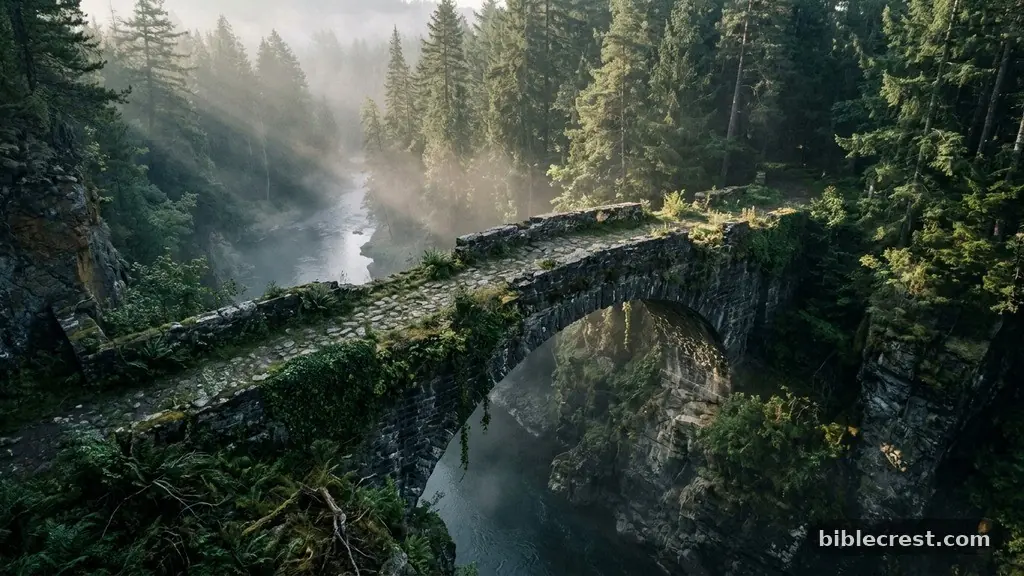
The title may also refer to a literal bridge within the novel’s setting. However, publicly available information does not provide enough dependable evidence to state its exact location, construction date, or physical appearance as fact. Readers should distinguish a documented place from a symbolic reading based on the language of the title.
That distinction is especially important with an obscure novel. Online summaries sometimes repeat one another without identifying a first-hand source, and a confident-sounding claim can quickly acquire the appearance of fact. For Wanton Bridge, the safest interpretation begins with what the words demonstrably suggest and then asks how the novel’s period, characters, and conflicts may develop those suggestions.
Rosalyn Alsobrook and the Available Record
Rosalyn Alsobrook is credited with writing the Wanton Bridge novel, but her author biography is not as widely documented as those of writers whose papers, interviews, and bibliographies have been digitised. That limited record means readers may encounter more discussion of the title than verifiable information about the author’s education, residence, literary circle, or complete body of work.
A responsible account should not turn missing information into invented biography. There is no sound basis here for assigning Alsobrook a precise birth date, claiming a particular profession, or describing a personal experience as the source of the novel unless a catalogue record, publisher’s note, archival collection, or contemporary review supports it.
The absence of a large digital footprint does not make the book unimportant. Many novels circulated through commercial publishers, library systems, book clubs, or second-hand shops long before digitisation became normal, and their records can remain scattered across catalogues rather than gathered on a single author page.
Readers researching Alsobrook can begin with the Library of Congress catalogue search for Rosalyn Alsobrook, then compare any result with library holdings, title pages, copyright pages, and period reviews. A catalogue may confirm an edition, but it may not explain the novel’s themes or provide reliable biographical detail.
The most accurate author biography available may therefore be a modest one: Alsobrook is associated with the novel Wanton Bridge, while fuller biographical particulars require primary or library-based research. That wording is less dramatic than an embellished profile, but it protects the reader from claims that cannot be checked.
Publication History and Why It Is Hard to Verify
The publication history of an older or obscure novel can be surprisingly difficult to reconstruct. A title may appear under different catalogue spellings, have more than one edition, or be listed in records that omit a jacket description, page count, series name, or original publication year.
For that reason, the book’s publication date should not be stated confidently without a title-page image or a reliable bibliographic record. A reprint date is not necessarily the first-publication date, and a bookseller’s estimated year can be less dependable than a library catalogue or copyright notice.
Several details help establish a trustworthy edition:
- The title page: This identifies the exact wording of the title and the author attribution.
- The copyright page: It may list the original copyright year, renewal information, publisher, and later printings.
- The publisher’s name: Publisher records can connect the novel to a period catalogue or fiction list.
- Library catalogue entries: These can confirm holdings, alternate titles, physical descriptions, and subject headings.
- Contemporary reviews: Newspaper or magazine notices may reveal the setting, plot premise, and reception without relying on later memory.
These clues should be compared rather than treated as interchangeable. A bookseller may describe a copy as a first edition because it is an early printing, while a copyright record may show that the work had appeared years earlier under another imprint.
Publication history also shapes interpretation. If Wanton Bridge was marketed as romance, regional fiction, family drama, or historical fiction, that classification would influence how early readers approached the book. The same story can be framed differently by a publisher’s dust jacket, a library’s subject heading, or a modern reader’s literary analysis.
Until those records are assembled, the honest position is that the novel’s precise publication chronology remains a research question. That does not prevent meaningful reading; it simply means that dates and edition details should be labelled as confirmed, probable, or unknown.
The Historical Context Behind the Title
Historical context matters because “wanton” has never been a neutral description. Communities have used moral language to discipline behaviour, especially the behaviour of women, young people, outsiders, and anyone who crosses social boundaries. A title built around that word may reflect the values of a period in which reputation could affect marriage prospects, inheritance, employment, and social belonging.
The bridge adds a physical image to those pressures. A crossing can mark the edge of a town, a division between families, a route from rural land to a growing settlement, or a boundary between accepted and forbidden spaces. If the setting is historical, the bridge may also represent changing transport, trade, industrial development, or the decline of older local customs.
Readers should avoid assuming that the novel’s historical setting is identical to the period in which Alsobrook wrote it. Historical fiction often looks backward from a later moment, allowing an author to discuss contemporary concerns through an earlier society. A conflict about a woman’s reputation, for example, may reveal both the fictional period’s rules and the author’s own era of publication.
Material details can sharpen that reading. Who owns the bridge? Who maintains it?
Is it privately controlled, publicly funded, or simply known by a local name? The answers would show whether the bridge is only scenery or a site where class, authority, commerce, and personal freedom meet.
Language provides another historical clue. The title’s use of “wanton” may preserve an older moral vocabulary, but it may also be deliberately provocative. An author can place an archaic word beside an ordinary object to make readers question who has the power to name someone’s conduct and whose version of respectability becomes official.
Without a verified synopsis, these points should remain interpretive possibilities rather than plot facts. They offer a historical-fiction lens, not permission to claim that a specific event, community, or social institution appears in the novel when the surviving evidence does not establish it.
Bridge Symbolism and the Novel’s Central Tension
Bridge symbolism is powerful because a bridge is neither the place left behind nor the place still ahead. It is an in-between structure, and that makes it useful for stories about identity, loyalty, migration, secrecy, reconciliation, and change.
In Wanton Bridge, the title can be read as a question about who is allowed to cross. A physical crossing may be open to everyone, while social crossing is restricted by family name, wealth, gender, race, religion, age, or reputation. The word “wanton” then describes not only an individual but also the judgment attached to someone who refuses a prescribed boundary.
The bridge can carry several symbolic meanings at once:
- Transition: A character may cross into adulthood, marriage, independence, danger, or exile.
- Connection: Separated families or communities may meet at a shared public place.
- Exposure: A bridge is visible, making private encounters vulnerable to gossip or discovery.
- Risk: Crossing water or unstable ground can turn a routine journey into a moral or physical test.
- Memory: A named bridge can preserve an old event long after the people involved are gone.
The tension between connection and danger is particularly important. A bridge makes contact possible, but it also concentrates movement; people may know who crosses, when they cross, and with whom they travel. In a tightly controlled community, that visibility can turn an ordinary structure into a place of surveillance.
“Wanton” may also reverse the expected symbolism. Instead of a stable bridge joining divided sides, the title could suggest a crossing that disrupts order. The bridge becomes “wanton” in the figurative sense: unruly, excessive, or unwilling to respect the boundaries that others treat as permanent.
This is why the title supports a richer literary analysis than a plot-only summary. Even before the reader knows every character, the name presents a world in which movement has consequences and moral labels may conceal fear, desire, or social control.
Novel Plot, Main Characters, and What Can Be Said Responsibly
Readers naturally want a novel plot summary and a list of main characters. In the case of Wanton Bridge, the available public record is too limited to provide a dependable scene-by-scene account or to name a cast without risking unsupported details.
That limitation should be stated plainly. A responsible explanation cannot claim that a particular heroine crosses the bridge at midnight, that a named family owns the surrounding land, or that a specific romance drives the story unless those details are supported by the text or a trustworthy contemporary synopsis.
What can be discussed is the narrative potential contained in the title. A novel named after a bridge is likely to give that place unusual structural importance, whether it appears repeatedly, shapes local memory, or serves as the setting for a decisive encounter. The title would be less likely to use the bridge casually than a story with an unrelated decorative location.
The word “wanton” also raises questions about characterisation. The person described in those terms may be genuinely reckless, or the label may be imposed by a narrator, family, church, neighbourhood, or rival. Literary fiction often creates tension by showing the difference between a public accusation and a character’s private motives.
When a copy of the novel is available, readers can test these possibilities by tracking five details:
- Who first uses the word “wanton,” and whether the speaker is trustworthy.
- How often the bridge appears and whether its meaning changes over time.
- Which characters are permitted to move freely and which are watched.
- Whether crossing leads to freedom, punishment, reunion, or loss.
- How the final reference to the bridge echoes or revises the title.
This method produces a stronger reading than an invented plot summary. It treats the novel as a primary text and lets the actual language establish its main characters, setting, conflicts, and ending.
Possible Themes in Wanton Bridge
The title supports several themes commonly associated with historical fiction, though each should be confirmed against the novel itself. The first is the conflict between personal desire and communal judgment. “Wanton” is a word that can describe conduct, but it can also function as a weapon used to reduce a complicated person to a moral accusation.
A second theme is freedom of movement. The bridge offers a route forward, yet crossing may involve leaving family, property, social protection, or a known identity behind. That makes travel more than geography; it becomes a decision about belonging.
A third theme is the instability of reputation. A bridge may carry a story about a scandal for generations, even when later residents know only a distorted version of what happened. The title can therefore connect physical infrastructure with oral history and collective memory.
Power is another likely area of interest. Someone controls access to a bridge, names it, polices it, or tells its story. Those acts reveal who has authority in the setting and whose version of events survives.
The book may also invite questions about gendered language. Historically, “wanton” has often been applied more harshly to women than to men, particularly when women display sexual independence, anger, ambition, or refusal. If the novel examines that imbalance, its title may be deliberately critical rather than condemnatory.
These themes can be organised in a practical reading grid:
| Title element | Possible literary function | Question for readers |
|---|---|---|
| Wanton | Moral accusation or sign of independence | Who applies the label, and who benefits from it? |
| Bridge | Connection, transition, danger, or public visibility | What changes when a character crosses? |
| Place-name | Community memory and local identity | What event or story gives the place its name? |
| Historical setting | Distance for examining social rules | Which customs belong to the period, and which echo the author’s time? |
The table does not substitute for evidence from the novel. It gives readers a disciplined way to connect title meaning with textual details instead of treating symbolism as a fixed answer.
How to Read the Novel as Historical Fiction
Historical fiction asks readers to hold two kinds of truth together. The events are invented or shaped by narrative, but the social world may be built from real practices, technologies, laws, occupations, landscapes, and forms of speech.
For Wanton Bridge, setting deserves close attention. Look for road conditions, transport, clothing, work patterns, food, housing, local government, religious practice, and communication. Such details establish the period more reliably than a vague statement that the story feels “old-fashioned.”
Dialogue deserves equal care. Words change meaning, and a period novel may use “wanton” differently from a contemporary reader. The surrounding speaker, tone, and consequences matter: a word spoken jokingly by a friend does not carry the same force as the same word used in a legal, religious, or family accusation.
Historical fiction also benefits from a question about omission. Which people are visible in the community, and which are mentioned only indirectly?
Who performs the labour that keeps the bridge, household, farm, business, or town functioning? Absence can reveal the limits of the narrator’s perspective.
The bridge itself can be checked against historical plausibility if the novel identifies a real location. Construction materials, engineering methods, travel times, and patterns of use can help readers decide whether the setting is documentary, loosely inspired, or wholly fictional. If no location is named, the structure should be treated as part of the novel’s imaginative geography.
Finally, avoid judging historical characters solely by present-day standards while also avoiding the opposite mistake of excusing every action as “just the period.” Strong reading recognises the pressures of the setting and still examines how characters respond to them.
Literary Analysis: Questions Worth Asking
A useful literary analysis of Wanton Bridge should begin with form. Is the story told by an all-knowing narrator, a participant, a remembered voice, or several perspectives? The answer affects whether the word “wanton” should be accepted as description or questioned as bias.
Next, examine repetition. If the bridge, water, road, weather, or crossing appears at important moments, those images may create a pattern. Repeated settings often change meaning as characters gain knowledge, lose trust, or make decisions they once considered impossible.
Pay attention to names and labels. A place-name can sound permanent, but its meaning may have been created by one dramatic incident or by a story repeated until no one remembers its origin. Likewise, a character’s nickname may reveal more about the community than about the person who carries it.
Contrast public and private spaces. The bridge is likely public or semi-public, while homes, bedrooms, churches, workplaces, and back roads may offer different levels of privacy. A character’s behaviour in each space can show the cost of social performance.
The ending deserves special attention. If the final pages return to the bridge, ask whether the place has been redeemed, exposed, abandoned, or transformed into a monument. If the bridge disappears from the ending, that absence may signal that the characters have outgrown the old boundary or that its unresolved history still dominates the story.
A strong interpretation should quote or closely paraphrase the text and identify patterns rather than merely attach a symbolic meaning to the title. The most persuasive claim will explain not only what the bridge represents but also how specific scenes, descriptions, and changes in language support that reading.
Why the Book Still Rewards Curiosity
Obscure books offer a different reading experience from heavily documented classics. There may be no large secondary literature, no familiar film adaptation, and no settled public interpretation waiting to be repeated. The reader has more responsibility, but also more room to notice what later commentary might overlook.
Wanton Bridge is especially intriguing because its title carries several historical meanings at once. It sounds like a geographical name, a moral judgment, and a miniature plot: someone or something is crossing a boundary in a way that unsettles the people watching.
The book also demonstrates why bibliographic research matters to literary appreciation. Knowing the correct edition, publisher, and period can clarify whether a word was conventional, provocative, regional, or deliberately old-fashioned. Even a simple copyright-page discovery can change the way a reader understands the novel’s historical distance.
Curiosity should be paired with restraint. If a detail cannot be verified, mark it as uncertain; if an interpretation depends on a missing passage, say so; and if a secondary summary conflicts with the book itself, give priority to the primary text.
That approach keeps the reading warm rather than merely technical. It respects Rosalyn Alsobrook as an author whose work deserves attention without pretending that the surviving public record tells us more than it does.
Frequently Asked Questions
What is Wanton Bridge about?
The novel is associated with Rosalyn Alsobrook, but a complete, reliably sourced plot summary and full list of main characters are not readily established from widely available public references. The title supports a reading centred on a bridge, social boundaries, moral judgment, and transition, but those themes should be checked against the text rather than presented as confirmed plot events.
What does “wanton” mean in the title?
“Wanton” can mean unruly, undisciplined, excessive, or morally improper, and it has often carried sexual implications. Its older and newer meanings overlap, so the title may suggest both a person judged by a community and a crossing that disrupts accepted boundaries.
Is Wanton Bridge historical fiction?
The title and available discussion make a historical-fiction reading plausible, but the exact setting and period need confirmation from the novel or a dependable catalogue description. Readers should look for period-specific details such as transport, labour, law, clothing, speech, and local customs before assigning a precise historical classification.
Who wrote Wanton Bridge?
Rosalyn Alsobrook is credited as the author. Beyond that attribution, detailed biographical information is limited in easily accessible sources, so claims about her life, career, or inspiration should be supported by primary records or reputable library materials.
How can I research the book further?
Start with a physical or digitised copy, recording the title page, copyright page, publisher, and edition details. Then compare library catalogues, contemporary newspaper reviews, archival finding aids, and later bibliographies, treating unsourced online summaries as leads rather than final evidence.
Final Takeaway
Wanton Bridge gains much of its force from the collision between an ordinary structure and a charged moral word. The bridge suggests passage and connection, while “wanton” raises questions about judgment, desire, freedom, and who has the authority to define improper behaviour.
Because Rosalyn Alsobrook’s biography and the novel’s publication record are not fully visible in common online sources, the best next step is careful primary-text research rather than confident speculation. Read the setting, labels, crossings, and repeated images closely, and let the book’s own language determine how its history and symbolism finally come together.